Exploring the Timeless Grandeur of Bhubaneswar
The Lingaraja Temple
Bhubaneswar, often called the “Temple City of India,” is a living chronicle of India’s architectural and spiritual evolution. Amidst its countless shrines, the Lingaraja Temple stands as a majestic symbol of Orissan architecture and the cultural synthesis that defines Indian history.
A Living Temple of Harihara
The Lingaraja Temple, over 1,000 years old, remains a vibrant center of worship. Here, Lord Shiva is revered as Harihara, a combined form of Vishnu and Shiva. This unique form reflects the rising prominence of the Jagannath sect under the Ganga dynasty, which built the iconic Jagannath Temple in Puri during the 12th century. The presence of Vaishnava imagery within the temple speaks volumes about the inclusive nature of Hindu traditions.

Bhubaneswar: A City of Temples
Bhubaneswar offers an unparalleled glimpse into pre-medieval India through its architecture. This temple town is dotted with shrines of varying sizes and styles, often vying for space amidst modern urban sprawl. While some lie in ruins, others, like the Lingaraja Temple, stand tall as enduring symbols of devotion and artistry.

At the heart of Bhubaneswar lies the vast Bindu Sagar Lake, around which numerous temples showcase the evolution of Kalinga architecture—from its earliest forms to its zenith. The Lingaraja Temple represents the pinnacle of this tradition, while others, like the Parasurameshvara Temple (7th century CE), display its nascent stages.
Architectural Marvels of Lingaraja
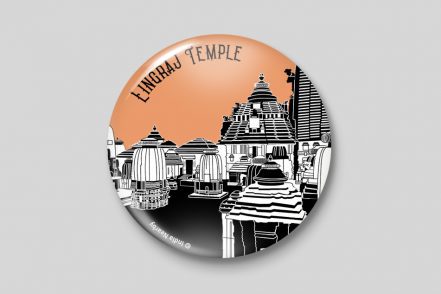
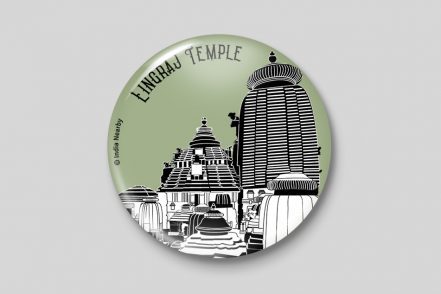
The Lingaraja Temple complex spans a massive 250,000 square feet, enclosed by towering compound walls. Its soaring central tower, standing 180 feet tall, is a masterpiece of proportion and detail, with deeply incised lines that create a graceful, curving silhouette.
The temple comprises four structures aligned on a single axis:
- Deul (sanctum)
- Jagamohana (assembly hall)
- Nata Mandira (festival hall)
- Bhoga Mandapa (hall of offerings)
Built from laterite and sandstone, this temple reflects centuries of refinement in temple construction. The complex houses over 150 smaller shrines, dedicated to various deities, reinforcing the concept of “one god, many forms.”

A Historical and Spiritual Legacy
The origins of the Lingaraja Temple are deeply rooted in legend and history. It is said that Lord Shiva’s linga, known as Krutibasa, originally resided under a mango tree, giving Bhubaneswar its ancient name, Ekamra Kshetra.
The temple’s construction is traditionally attributed to the Somavamsi dynasty, particularly to King Yayati Kesari in the 10th century. However, parts of the temple, such as the sanctum, may date back to the 7th century. The Ganga dynasty, which succeeded the Somavamsis, made significant additions and introduced Vaishnava elements to the temple’s worship practices.
An intriguing feature of the Lingaraja Temple is its underground river, believed to fill the Bindu Sagar Tank, whose waters are said to have healing powers. Pilgrims flock here to take a holy dip during festivals, with Shivratri being the most celebrated occasion.
Nearby Historical Treasures
Bhubaneswar is a treasure trove of ancient sites beyond the Lingaraja Temple:
Each showcases a distinct phase of temple architecture and history. A short journey from the city takes you to Dhauli, where Emperor Ashoka’s inscriptions from 2300 years ago are etched into stone, and Sisupalgarh, an ancient fortified city dating back to the 3rd century BCE.


A Journey Through Time
Bhubaneswar offers an unparalleled opportunity to experience a civilization spanning over 2,000 years. From the grandeur of the Lingaraja Temple to the timeless ruins of Sisupalgarh, the city invites you to immerse yourself in a history where every stone tells a story.
Whether you’re a history buff, a spiritual seeker, or an architecture enthusiast, Bhubaneswar promises a journey like no other—a journey into India’s soul.